The ceremony as the sources tell it
English Wikipedia describes a ritual in which the zipa was covered in gold dust, rafted out onto the lake and made offerings to the Guatavita goddess, then washed the gold off in the water while worshippers threw in trinkets, jewellery and other offerings. Spanish Wikipedia adds four caciques who accompanied the zipa and says offerings of gold and emeralds were thrown into the water. It treats the story as one of the origins of the El Dorado legend.
A sacred lake
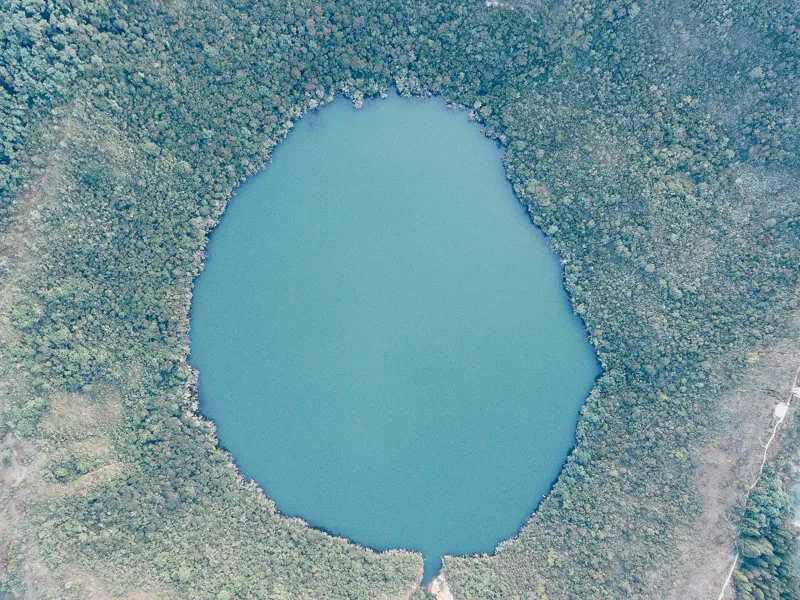
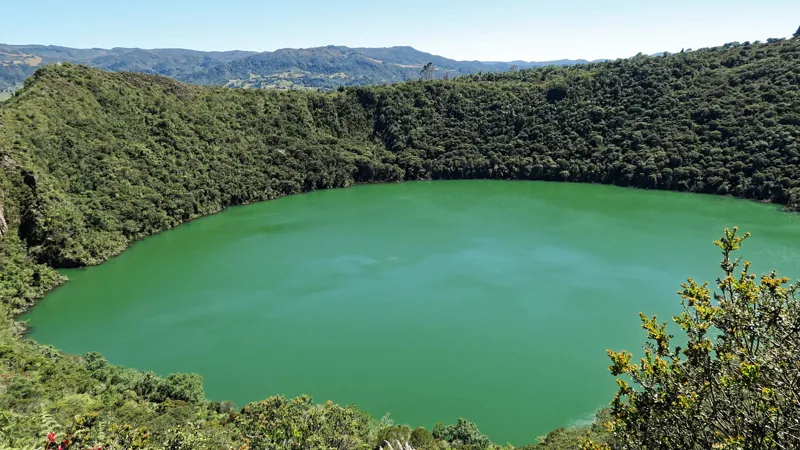
Wikipedia’s article on Muisca religion lists Guatavita among the natural sites the Muisca considered sacred, where people gathered for rituals and sacrifices. Its caption links the rainbow god Cuchavira to the lake. It says rituals at sacred lakes mostly used gold and emeralds.
The drainage attempts
Spanish Wikipedia lists several attempts to lower the water and recover gold: Captain Lázaro Fonte and Hernán Pérez de Quesada recovered some gold (no dates given), Antonio de Sepúlveda failed, miners of the Real Mariquita failed in 1625, and Colonels Hamilton and Campbell failed in 1832. Around 1900 the lake was designated a quarry and material was taken for roads in Sesquilé. English Wikipedia sums up that the attempts yielded no more than a few gold and silver artifacts.
What you can see today
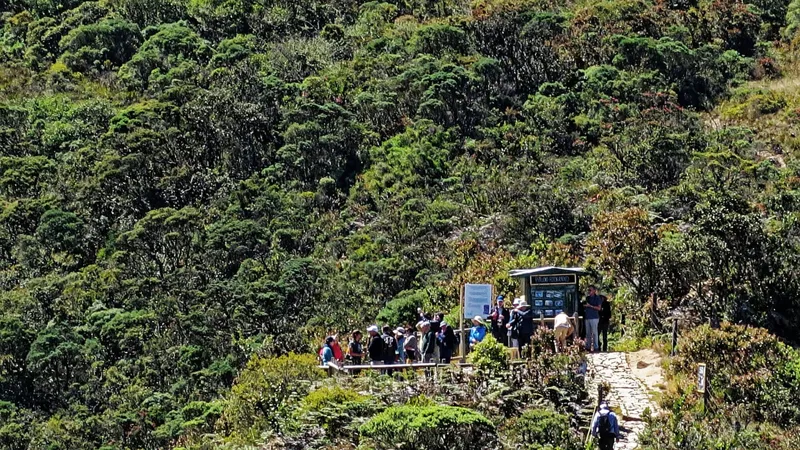
- The lake itself, from the viewing path of the guided walk: see how the visit works.
- The Muisca raft and objects from the lake in the Gold Museum in Bogotá (Wikipedia). We do not give opening hours; check the museum.
A note on the story: the guides and listings tell the legend their own way. Treat details such as exact dates and amounts of gold with care unless a source is named.
For the practical side, read entry and rules and Bogotá to Lake Guatavita.
Frequently asked questions
Is there gold at the bottom of Lake Guatavita?
English Wikipedia says attempts to drain the lake or salvage its gold found no more than a few gold and silver artifacts. The CAR says the lake is protected and tries to prevent attempts to extract gold.
What is the Muisca raft?
A raft made of rushes that represents the zipa's ceremonial craft. Wikipedia says one is displayed in the Gold Museum in Bogotá, along with archaeological objects from the lake.
Was Guatavita the only Muisca sacred lake?
No. Wikipedia lists Guatavita, Iguaque, Fúquene, Tota, the Siecha lakes, Teusacá and Ubaque among the Muisca sacred lakes.
Some links are affiliate links: if you book through them we earn a small commission at no extra cost to you. It funds the research behind this site.